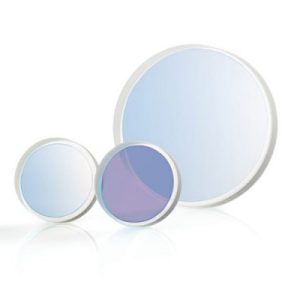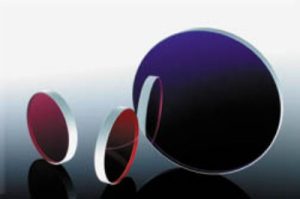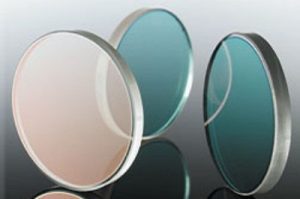
Optical filter, in simple terms, is an optical device used to selectively filter the required radiation band. The substrate is mostly made of optical materials such as white glass, quartz, colored glass, or plastic resin.
The classification of optical filters can be based on spectral distribution, spectral type, bandwidth, wavelength, film characteristics, industry application characteristics, and other factors.
1. Distinguish filters by spectral band:
Filter can be divided into UV filter, visible light filter, near-infrared filter, infrared filter, and far-infrared filter based on the length of the spectral distribution (i.e. the region where the spectrum is located).
Spectral wavelength range division:
UV filter 180-400nm
Visible light filter 400~700nm
Near infrared filter 700~3000nm
Infrared filter 3000nm~10um or above
Center wavelength (CWL):
The wavelength used by the filter in practical applications, such as LED lights with a main peak of 850nm, the required center wavelength is 850nm.
Peak Transmittance (TP):
Assuming the initial value of light is 100%, there is some loss after passing through the filter, and only 85% is measured by spectroscopy. Therefore, the optical transmittance of this filter can be set as (Tp)>80%.
Half bandwidth (FWHM):
Simply put, it refers to the wavelength corresponding to half of the highest transmittance, subtracting the left and right wavelength values. For example, the peak value is preferably 90%, half is 45%, and the left and right wavelengths corresponding to 45% are 875nm and 825nm, resulting in a half bandwidth of 50nm.
Deadline (Blocking):
The transmittance corresponding to the cut-off zone Since it is very difficult to achieve zero transmittance, one can only choose a transmittance close to zero. However, usually a transmittance of 10 to the negative 5th power or above can meet most usage requirements, which is usually converted into an optical density value represented by OD>5.
Cut off band:
The minimum acceptable range of unwanted wavelengths is determined to be slightly wider than this range in practice, as the response range of most electronic imaging sensors is 350-950nm. The determination of the cutoff range for ultraviolet and infrared is more complicated than this, and needs to be determined based on the response range of the probe used.