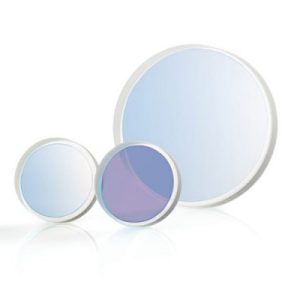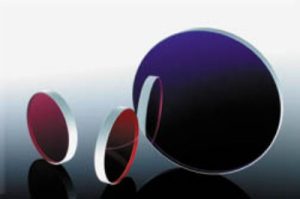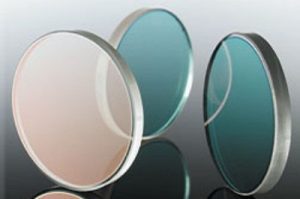
An off-axis parabolic mirror is a specially designed reflective optical element whose surface is part of a parabolic rotationally symmetrical structure, but the optical axis does not coincide with the vertex of the mirror. This structure allows it to focus parallel light to a specific position off the optical axis while avoiding central obstruction, making it widely used in laser processing, infrared detection, and spectral analysis. Its core function is to achieve efficient beam collection and directional transmission through precise surface design, making it particularly suitable for scenarios requiring separation of incident and reflected light paths.
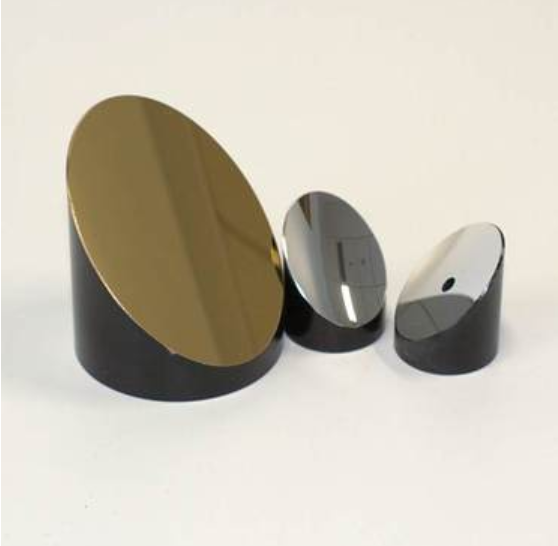
I. Technical Principles and Structural Design:
Off-axis parabolic mirrors follow the equation of a parabola, and their reflecting surface is formed by rotating the parabola around its axis of symmetry by a certain angle and then intercepting it. Compared to coaxial parabolic mirrors, the off-axis design, by adjusting the rotation angle and the intercept range, shifts the focal point away from the center of the mirror, thus avoiding energy loss caused by the overlap of incident and reflected light at the center of the mirror. For example, when the parabolic focal point is outside the axis of rotation, parallel light converges to the focal point after reflection, while the incident and reflected light are completely separated in space. This design is particularly important in systems that need to process both incident and reflected signals simultaneously, such as the transmission and reception isolation of lidar and the secondary mirror support of astronomical telescopes.
II. Key Parameters and Performance Indicators:
The performance of off-axis parabolic mirrors is determined by multiple parameters. The wavelength range covers 800nm to 20µm, adapting to application requirements from the visible to far-infrared bands. Reflectivity reaches up to 96%, achieved through protective gold, silver, or aluminum coatings. Gold coating performs excellently in the infrared band, silver coating is superior in the visible to near-infrared bands, and aluminum coating is suitable for general applications due to its cost advantage. In terms of size, various stock sizes from 1 inch to 4 inches are available, with effective focal lengths extending from 15mm to 9 inches. The aperture diameter exceeds 90% of the diameter, ensuring efficient beam transmission. Customization is also available. Furthermore, some models are equipped with a tapered aperture parallel to the focused beam, facilitating integration with other optical components, such as fiber optic coupling or mechanical fixation.
III. Application Scenarios and Key Operating Points:
In practical applications, off-axis parabolic mirrors are often used in scenarios requiring high-precision beam control. For example, in laser processing, they can focus high-power lasers into micron-sized spots for precision cutting or welding; in infrared thermal imaging, they improve imaging sensitivity by collecting infrared light emitted from the target and focusing it onto a detector; in spectral analysis, in conjunction with gratings or prisms, they can separate and focus light of different wavelengths onto a detector array. When using these mirrors, care should be taken to avoid contamination; finger touching or dust accumulation may reduce reflectivity. During installation, ensure that the mirror normal is precisely aligned with the incident light direction; excessive deviation will lead to focus shift or increased aberrations. For long-term storage, maintain a dry environment to prevent coating oxidation.
IV. Technical Advantages and Selection Recommendations:
Compared to traditional lenses or coaxial parabolic mirrors, the core advantage of off-axis design lies in the absence of central obstruction and flexible, adjustable optical path. For example, in systems requiring simultaneous input and reflection of signals, off-axis structures can avoid signal interference; in space-constrained scenarios, the optical path layout can be optimized by adjusting the off-axis angle. When selecting a model, the coating type should be chosen based on the wavelength range; gold coating is preferred for infrared applications, while silver coating is suitable for visible light applications. The size and focal length should be determined based on the required spot size; large-size mirrors are suitable for collecting weak signals, while small-size mirrors are used in high-power scenarios. If integration with other components is required, models with tapered apertures should be prioritized to simplify the mechanical fixing process.