
PRODUCT CATEGORIES
INOUIRY
The initial step in creating a primary or master grating is selecting the substrate material, typically glass or copper. The substrate is polished to a high degree of flatness and coated with a thin layer of aluminum. Adjusting the parallelism and equidistant spacing of the scribing lines requires a lengthy process, potentially taking several days to set up and test before actual scribing. The scribing machine must be able to retract the diamond tip along a precise path after each scribing, scribing the substrate according to a predetermined amount. The parallelism and displacement of the scribing lines must be precisely controlled.
A series of tests are conducted on the scribing process, checking the grating’s efficiency, scribing line shape, and stray light. A small mechanical adjustment may be necessary after each test. To optimize the scribing line shape for specific optical properties, repeated testing may be required for a week or longer. Only after thorough testing can the primary grating be scribed on a large substrate. Primary gratings are very expensive, so their use was limited until replica gratings were developed.
Borisun Optics provides a variety of planar scribed diffraction gratings in various sizes and line counts. Please feel free to contact us with any questions or needs; we are happy to assist you.
| Substrate material: | Float Glass |
|---|---|
| Dimensional tolerance | ±0.5 mm |
| Thickness tolerance | ±0.5 mm |
| Efficiency | 60%-80% @ Blaze Wavelength |
| Surface quality | 60-40 |
| Effective Aperture | 90% |
| Damage Threshold | 350 mJ/cm² @ 200 ns Pulsed Laser 40 W/cm² Continuous Laser |
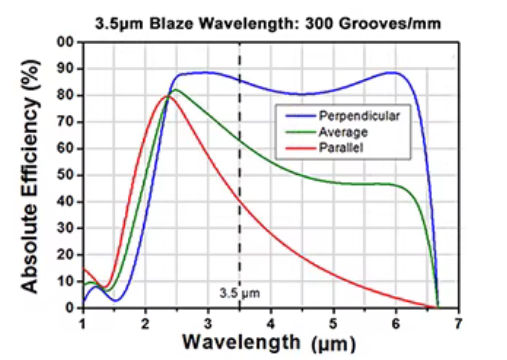
300-lines Reflective Diffraction Grating Transmission Curve
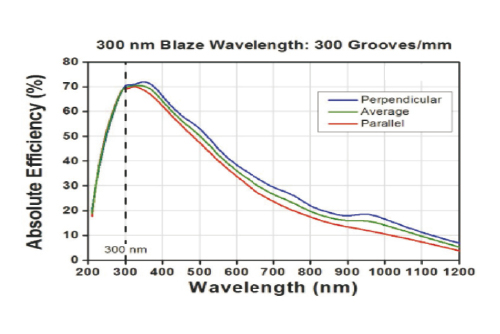
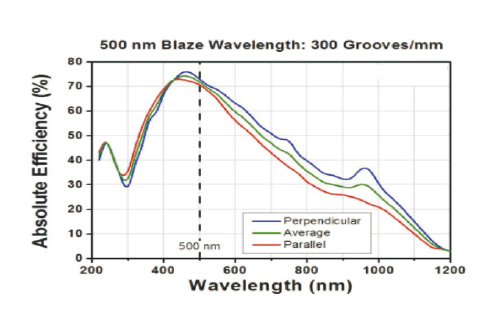
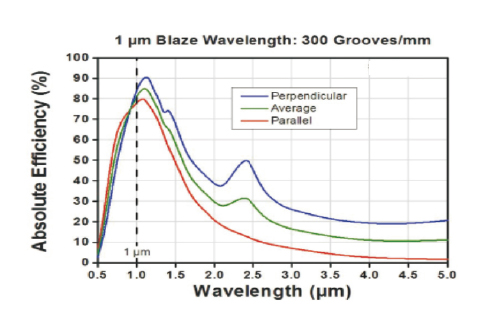
Inventory Parameters
| Count of Lines (l/mm) | Blaze Wavelength (nm) | Blaze Angle | Dispersion (nm/mr) | Dimensions (mm) |
|---|---|---|---|---|
| 300 | 300nm | 2°34′ | 3.33 | 12.5mm; 25mm; 50mm |
| 300 | 500nm | 4°18′ | 3.32 | 12.5mm; 25mm; 50mm |
| 300 | 1000nm | 8°36′ | 3.30 | 12.5mm; 25mm; 50mm |
| 300 | 3500nm | 26°5′ | 0.35 | 12.5mm; 25mm; 50mm |
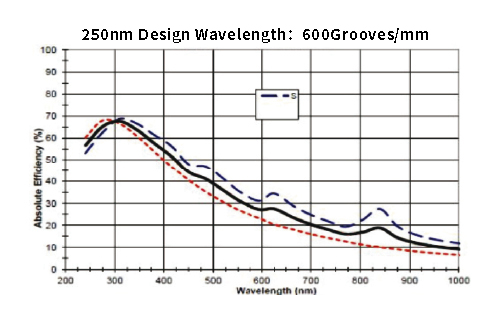
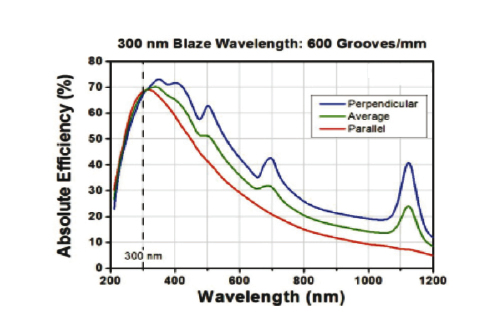
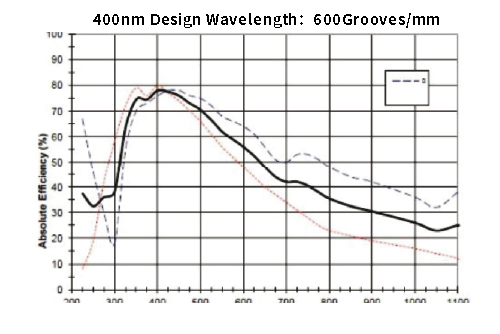
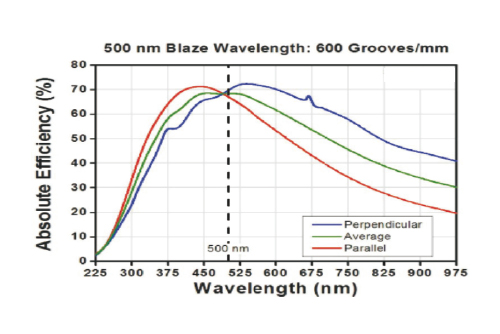
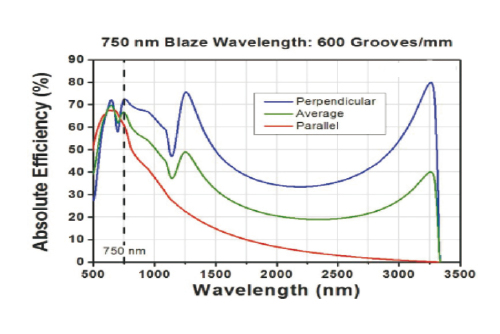
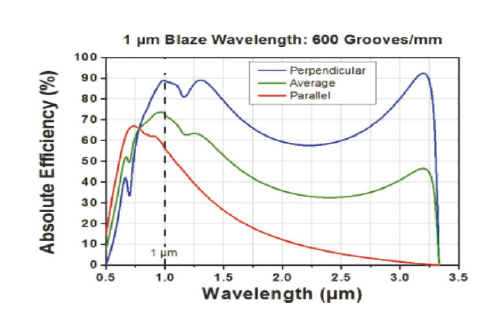
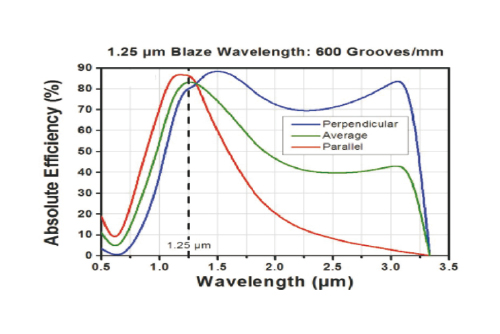
600-lines Reflective Diffraction Grating Transmission Curve
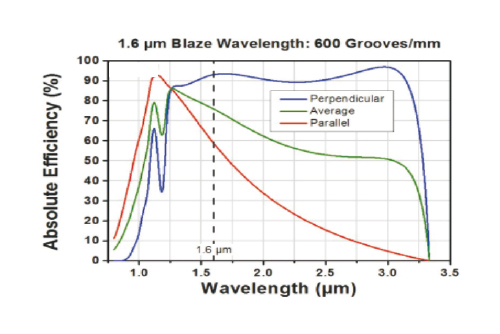
Inventory Parameters
| Count of Lines (l/mm) | Blaze Wavelength (nm) | Blaze Angle | Dispersion (nm/mr) | Dimensions (mm) |
|---|---|---|---|---|
| 600 | 250nm | 4°18′ | 1.67 | 12.5mm; 25mm; 50mm |
| 600 | 300nm | 5°9′ | 1.67 | 12.5mm; 25mm; 50mm |
| 600 | 400nm | 6°53′ | 1.67 | 12.5mm; 25mm; 50mm |
| 600 | 500nm | 8°37′ | 1.65 | 12.5mm; 25mm; 50mm |
| 600 | 750nm | 13°0′ | 1.62 | 12.5mm; 25mm; 50mm |
| 600 | 1000nm | 17°27′ | 1.59 | 12.5mm; 25mm; 50mm |
| 600 | 1250nm | 22°1′ | 1.55 | 12.5mm; 25mm; 50mm |
| 600 | 1600nm | 28°41′ | 1.46 | 12.5mm; 25mm; 50mm |
1200-lines Reflective Diffraction Grating Transmission Curve
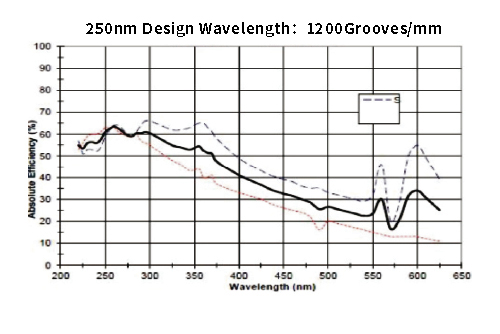
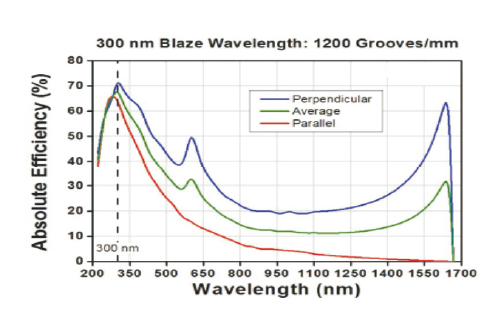
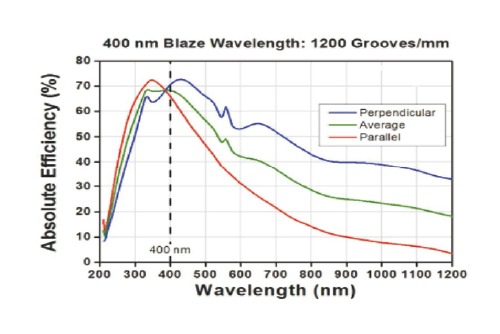
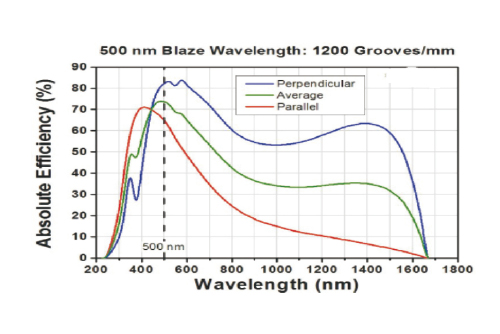
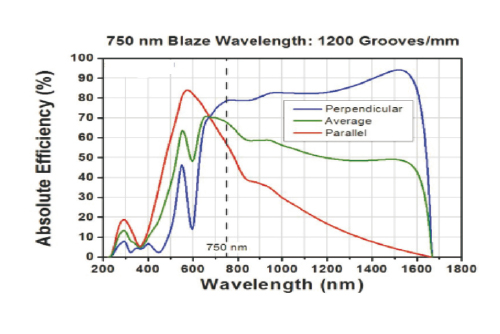
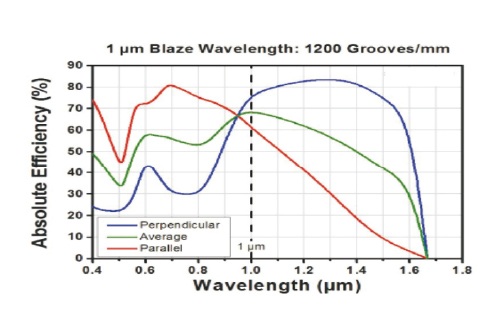
Inventory Parameters
| Count of Lines (l/mm) | Blaze Wavelength (nm) | Blaze Angle | Dispersion (nm/mr) | Dimensions (mm) |
|---|---|---|---|---|
| 1200 | 250nm | 8°37′ | 0.82 | 12.5mm; 25mm; 50mm |
| 1200 | 300nm | 10°22′ | 0.82 | 12.5mm; 25mm; 50mm |
| 1200 | 400nm | 13°53′ | 0.81 | 12.5mm; 25mm; 50mm |
| 1200 | 500nm | 17°27′ | 0.8 | 12.5mm; 25mm; 50mm |
| 1200 | 750nm | 26°44′ | 0.74 | 12.5mm; 25mm; 50mm |
| 1200 | 1000nm | 36°52′ | 0.67 | 12.5mm; 25mm; 50mm |
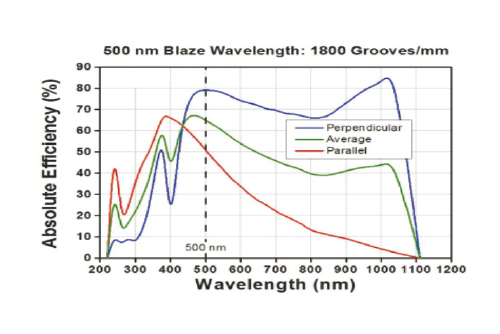
1800-lines Reflective Diffraction Grating Transmission Curve
If you need to purchase stock or customize Optical Gratings, please kindly contact our sales team:
info@borisuns.com