PRODUCT CATEGORIES
INOUIRY
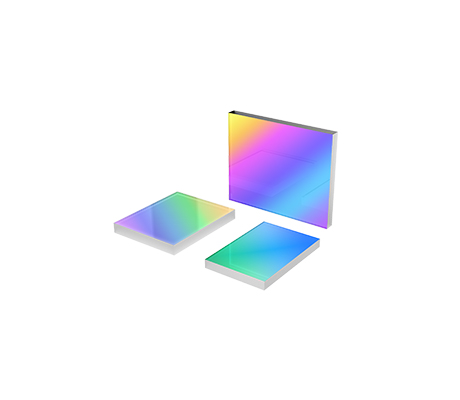
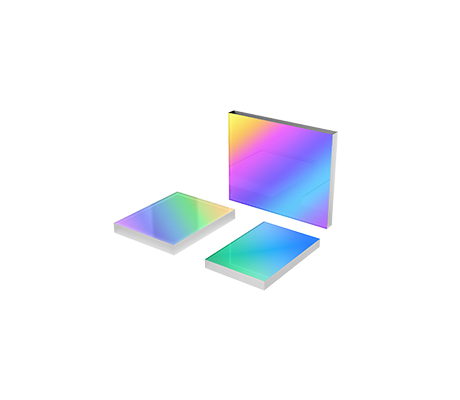
Gratings is an optical element composed of a series of equidistant parallel lines. It is a dispersive element that utilizes the principles of light diffraction and interference to disperse light, and is widely used in biochemical instruments, spectrometers, spectrophotometers, and related fields.
There are two types of gratings: transmission and reflection. Reflection gratings are commonly used in spectrometers. Each equal-width, parallel groove acts as an optical slit. There are 1200, 1800, or 2400 lines per millimeter, resulting in hundreds of thousands of lines on the entire grating, thus achieving effective light dispersion.
In typical reflection gratings, because the principal pole of the zeroth-order diffraction, which has no dispersive ability, accounts for 80% of the diffracted light intensity, and the intensity weakens as the order of the principal pole increases, the grooves are etched in a sawtooth shape to give it directional scintillation capability, thus concentrating the energy distribution within the desired wavelength range.
From a manufacturing perspective, gratings can be divided into scribing gratings and holographic gratings. Scribing gratings are created by scribing lines onto a reflective surface using a scribing machine, while holographic gratings are fabricated using laser interferometry.
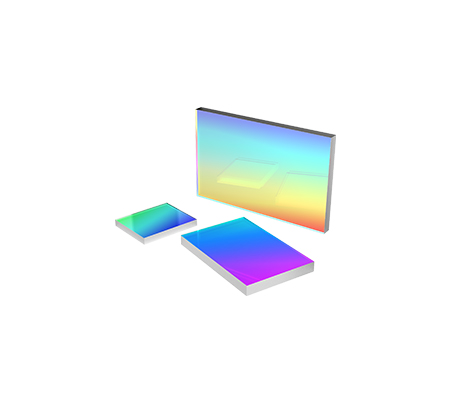
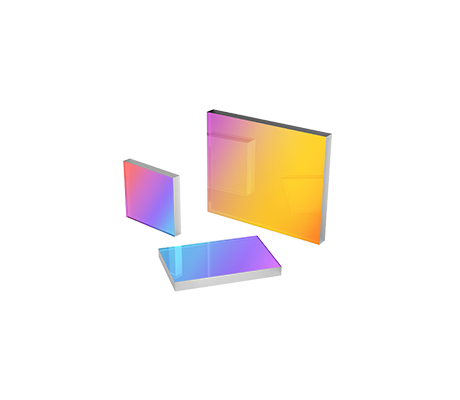
Borisun Optics can provide various gratings, such as transmission gratings, planar scribing diffraction gratings, planar holographic gratings, and edged gratings.