
PRODUCT CATEGORIES
INOUIRY
Zero-order waveplates (also known as zero-order retarders) are made by cementing two multi-order waveplates together. Cemented waveplates can mitigate the effects of temperature on the waveplate to some extent, but they also increase the sensitivity of the waveplate’s retardation to wavelength and angle of incidence.
Cemented Zero-order Waveplates
Bonded zero-pole waveplates are made from high-quality quartz crystals. Each optically bonded zero-pole waveplate consists of two multi-stage quartz waveplates, creating a corresponding optical path difference. It is formed by aligning the fast axis of one quartz waveplate with the slow axis of another, with the thickness difference between the two waveplates equal to λ/4 or λ/2. Compared to multi-stage waveplates, optically bonded zero-pole waveplates are less sensitive to wavelength, temperature coefficient, and angle of incidence.
| Substrate material | quartz crystal |
|---|---|
| Wavefront distortion | λ/8 @632.8nm |
| Phase delay accuracy | λ/300 |
| Parallelism (single piece) | <1 second |
| Surface quality | 20-10 |
| Coating | R<0.25%@center wavelength |
| Damage threshold | >5J/cm², 20ns, 20Hz @1064nm |
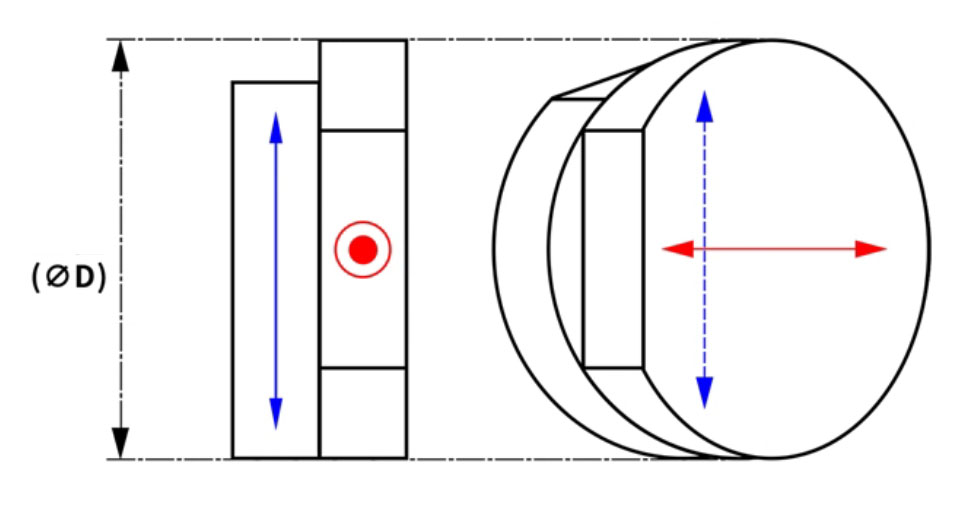
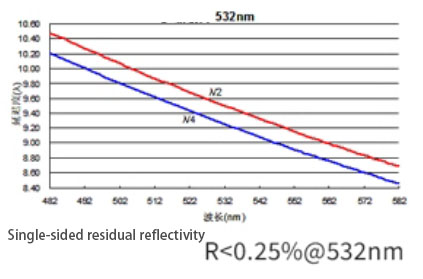
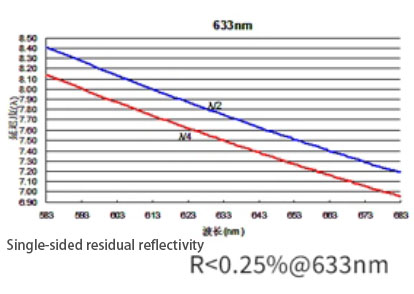
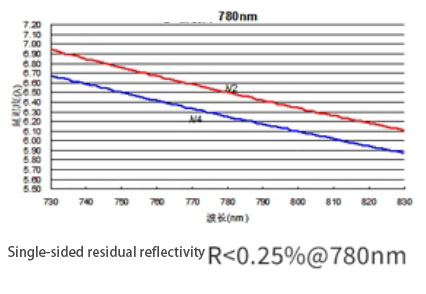
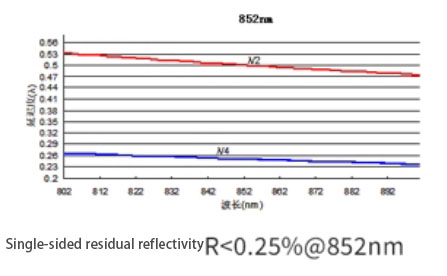
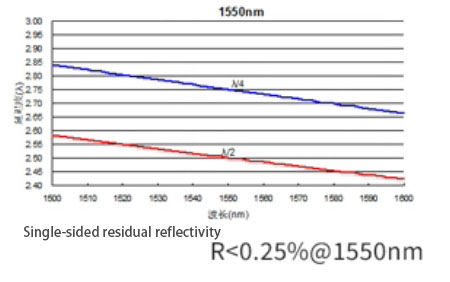
Phase delay curve:
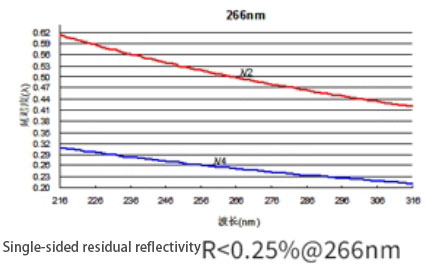
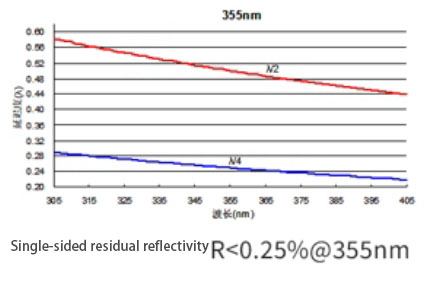
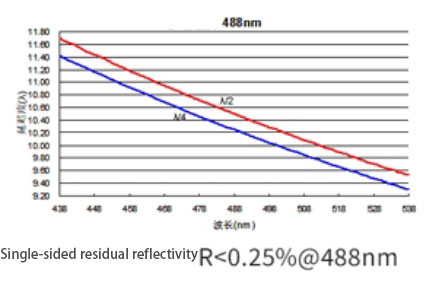
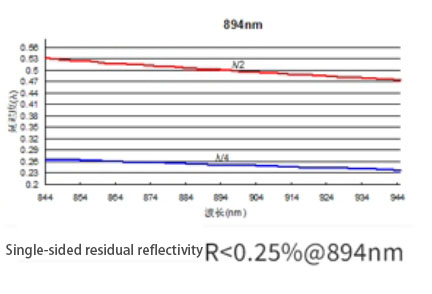
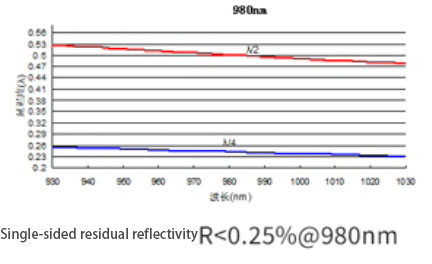
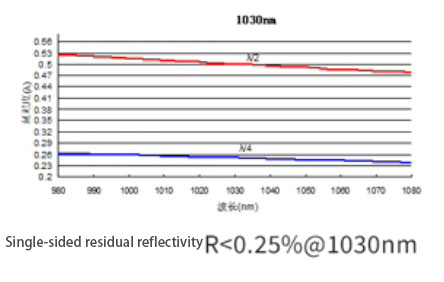
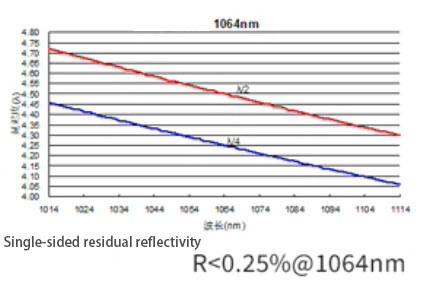
In Stock Parameters:
| Wavelength (nm) | Phase Delay | Dimensions (mm) |
|---|---|---|
| 266nm | λ/2; λ/4 | 10mm; 12.7mm;20mm; 25.4mm |
| 355nm | λ/2; λ/4 | 10mm; 12.7mm;20mm; 25.4mm |
| 405nm | λ/2; λ/4 | 10mm; 12.7mm;20mm; 25.4mm |
| 488nm | λ/2; λ/4 | 10mm; 12.7mm;20mm; 25.4mm |
| 532nm | λ/2; λ/4 | 10mm; 12.7mm;20mm; 25.4mm |
| 633nm | λ/2; λ/4 | 10mm; 12.7mm;20mm; 25.4mm |
| 780nm | λ/2; λ/4 | 10mm; 12.7mm;20mm; 25.4mm |
| 795nm | λ/2; λ/4 | 10mm; 12.7mm;20mm; 25.4mm |
| 852nm | λ/2; λ/4 | 10mm; 12.7mm;20mm; 25.4mm |
| 894nm | λ/2; λ/4 | 10mm; 12.7mm;20mm; 25.4mm |
| 980nm | λ/2; λ/4 | 10mm; 12.7mm;20mm; 25.4mm |
| 1030nm | λ/2; λ/4 | 10mm; 12.7mm;20mm; 25.4mm |
| 1064nm | λ/2; λ/4 | 10mm; 12.7mm;20mm; 25.4mm |
| 1550nm | λ/2; λ/4 | 10mm; 12.7mm;20mm; 25.4mm |
Air Spaced Zero-order Waveplates
Air-spaced zero-order waveplate consists of two multi-order quartz waveplates separated by a spacer to form an air gap. It has a high damage threshold and can generate a corresponding incident/2 or incident/4 optical path difference. By aligning the fast axis of one waveplate with the slow axis of the other, a composite retardation plate is formed. The net retardation is the difference between the retardations of the two waveplates. Air-gap zero-order waveplates are less affected by temperature and wavelength than multi-order waveplates.
| Substrate material | quartz crystal |
|---|---|
| Wavefront distortion | λ/8 @632.8nm |
| Phase delay accuracy | λ/300 |
| Parallelism (single piece) | <1 second |
| Surface quality | 20-10 |
| Coating | R<0.25%@center wavelength |
| Damage threshold | >10J/cm², 20ns, 20Hz @1064nm |
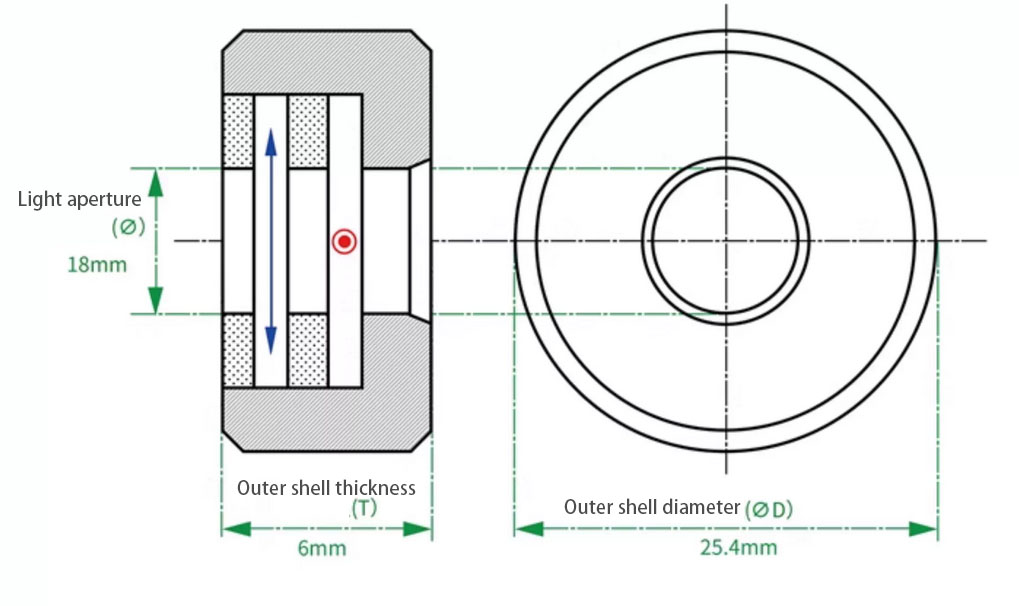
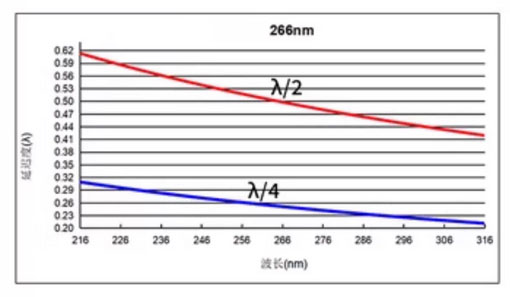
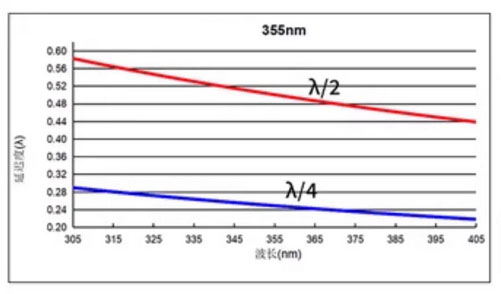
Phase delay curve:
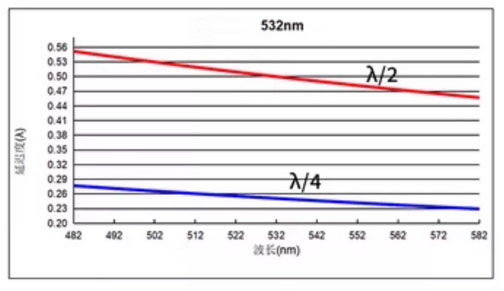
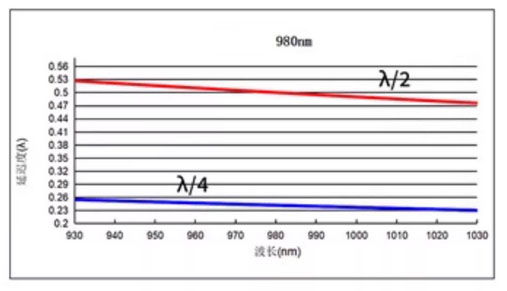
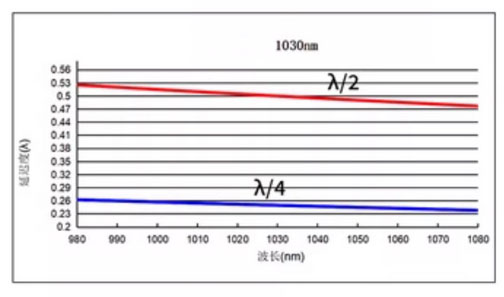
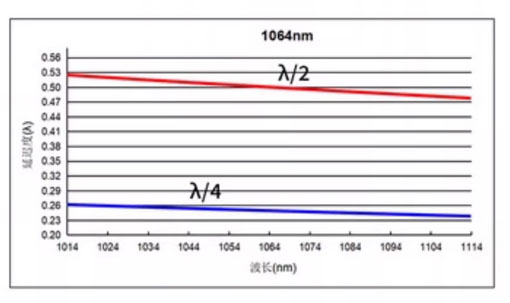
In Stock Parameters:
| Wavelength (nm) | Phase Delay | Dimensions (mm) |
|---|---|---|
| 266nm | λ/2; λ/4 | 18mm; 25.4mm |
| 355nm | λ/2; λ/4 | 18mm; 25.4mm |
| 405nm | λ/2; λ/4 | 18mm; 25.4mm |
| 450nm | λ/2; λ/4 | 18mm; 25.4mm |
| 515nm | λ/2; λ/4 | 18mm; 25.4mm |
| 532nm | λ/2; λ/4 | 18mm; 25.4mm |
| 589nm | λ/2; λ/4 | 18mm; 25.4mm |
| 632.8 | λ/2; λ/4 | 18mm; 25.4mm |
| 780nm | λ/2; λ/4 | 18mm; 25.4mm |
| 795nm | λ/2; λ/4 | 18mm; 25.4mm |
| 800nm | λ/2; λ/4 | 18mm; 25.4mm |
| 808nm | λ/2; λ/4 | 18mm; 25.4mm |
| 852nm | λ/2; λ/4 | 18mm; 25.4mm |
| 905nm | λ/2; λ/4 | 18mm; 25.4mm |
| 980nm | λ/2; λ/4 | 18mm; 25.4mm |
| 1030nm | λ/2; λ/4 | 18mm; 25.4mm |
| 1064nm | λ/2; λ/4 | 18mm; 25.4mm |
| 1550nm | λ/2; λ/4 | 18mm; 25.4mm |
If you would like to purchase stock or custom Zero order wave plates, please contact our sales team:
info@borisuns.com