
PRODUCT CATEGORIES
INOUIRY
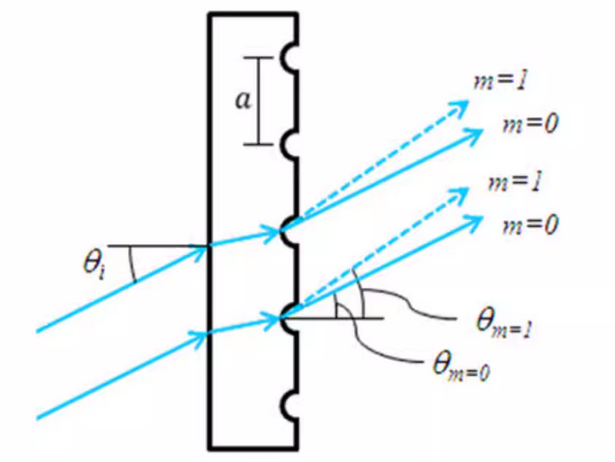
Transmission gratings offer a simple optical path design and significant advantages over fixed gratings, such as those used in spectrometers. The incident beam disperses at a fixed angle at the back of the grating.
Transmission gratings are insensitive to collimation errors of some types of gratings. To achieve high diffraction efficiency, transmission gratings have low scribe line density.
The diffraction angle increases with increasing scribe line density, and the refractive index of the substrate material limits the transmittance at longer wavelengths, leading to performance degradation. The dispersive properties of the grating make it suitable for compact systems using small detector arrays. This type of grating is also insensitive to polarization.
Basic Parameters of Transmmion Gratings
| Substrate material | Quartz or B270 |
|---|---|
| Dimensional error | +-0.5mm |
| Thickness error | +-0.2mm |
| Surface Quality | 60-40 |
| Effective aperture | 60-40 |
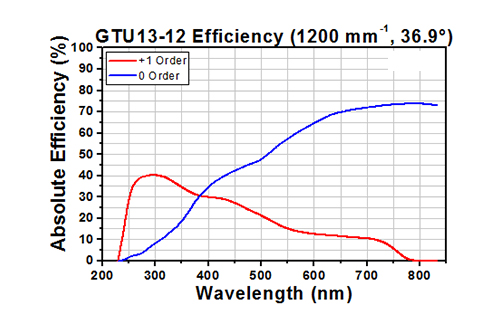
Transmission Gratings - UV-band Transmission Curve
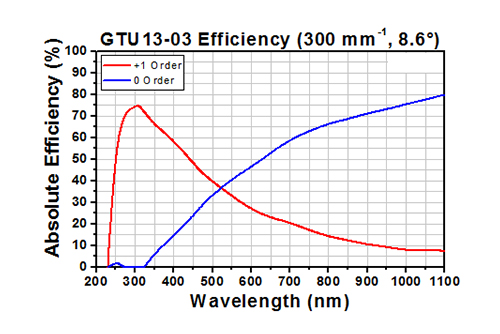
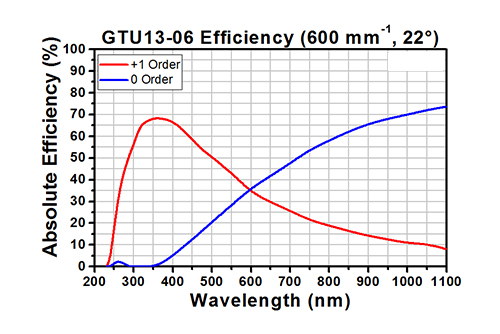
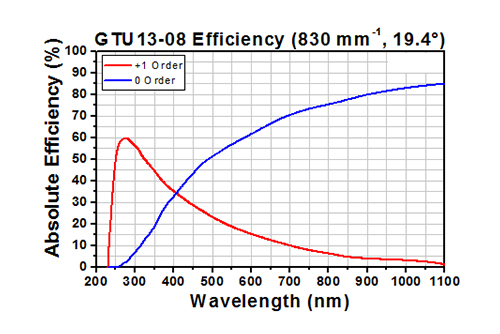
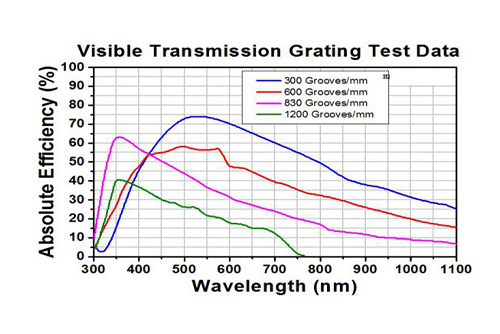
Transmission Gratings - VIS-band Transmission Curve
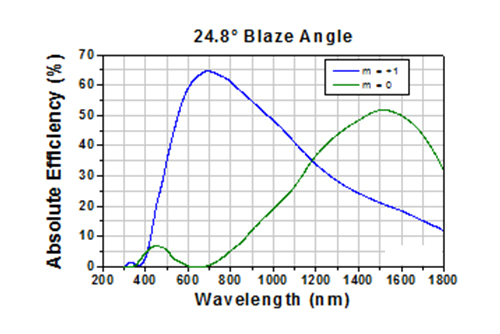
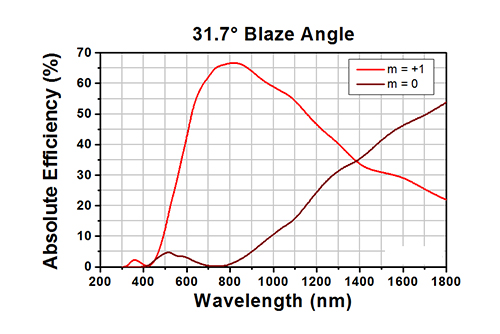
Transmission Grating - NIR-band Transmission Curve
Transmission Grating Plate Inventory parameters
| Substrate | Wavelength (mm) | Number of lines (1/mm) | Diffraction angle (mm) | Dimensions (mm) |
|---|---|---|---|---|
| Quartz | UV-band | 300 | 8°6′ | 12.7mm; 25.4mm; 50mm |
| Quartz | UV-band | 600 | 22°0′ | 12.7mm; 25.4mm; 50mm |
| Quartz | UV-band | 830 | 19°4′ | 12.7mm; 25.4mm; 50mm |
| Quartz | UV-band | 1200 | 36°9′ | 12.7mm; 25.4mm; 50mm |
| B270 | VIS-band | 300 | 17°5′ | 12.7mm; 25.4mm; 50mm |
| B270 | VIS-band | 600 | 28°7′ | 12.7mm; 25.4mm; 50mm |
| B270 | VIS-band | 830 | 29°87′ | 12.7mm; 25.4mm; 50mm |
| B270 | VIS-band | 1200 | 36°9′ | 12.7mm; 25.4mm; 50mm |
| B270 | NIR-band | 300 | 24°8′ | 12.7mm; 25.4mm; 50mm |
| B270 | NIR-band | 300 | 31°7′ | 12.7mm; 25.4mm; 50mm |
Precautions
The surface of the grating is extremely fragile, so only touch the edges when handling it; it is best to wear latex gloves or finger cots to prevent dirt from your fingers from touching the grating surface; dust on the grating cannot be cleaned by contact; the grating surface may have minor surface defects that do not affect performance, and the grating is still a qualified product.
If you need to order stock or custom optical gratings, please contact our sales team:
info@borisuns.com