Imagine a self-driving car speeding along under the blazing midday sun. Its “eyes”—the LiDAR—must precisely capture the faint signals reflected from vehicles ahead amidst millions of light pulses per second.
This is akin to trying to hear a pin drop at a rock concert.
Sunlight, streetlights, and interference from other vehicles all attempt to drown out that precious “echo signal.” If a valid signal cannot be extracted from the background noise, the point cloud image will become noisy, potentially leading to misjudgments by the system.
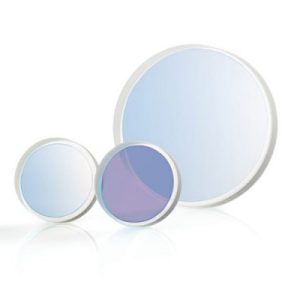
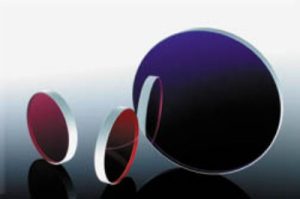
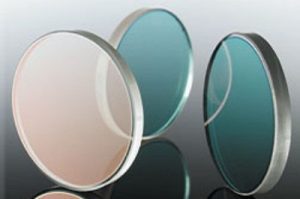
This brings us to the often-overlooked yet crucial “gatekeeper” in LiDAR systems—the ultra-narrowband interference filter. Today, we’ll take a hardcore look at how this optical component determines the life or death of a LiDAR system.
I. The “Survival Rules” of LiDAR: Racing Against the Speed of Light
Before delving into filters, we need to review the basic logic of LiDAR (Light Detection and Ranging). Whether used for autonomous driving, terrain mapping, or atmospheric monitoring, the core of LiDAR lies in “time measurement.”
A LiDAR system emits pulsed laser light into the environment and calculates the time it takes for the signal to return. Its basic distance formula is as follows:
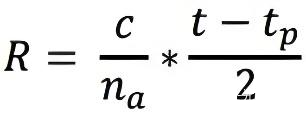
Where R is the distance, c is the speed of light, t is the round-trip time, and n is the refractive index of air.
This seemingly simple formula presents significant challenges in practical applications. When a laser beam is emitted, it diverges. Before hitting the ground, it may encounter branches, bushes, and finally the ground itself. This creates “multiple returns.”
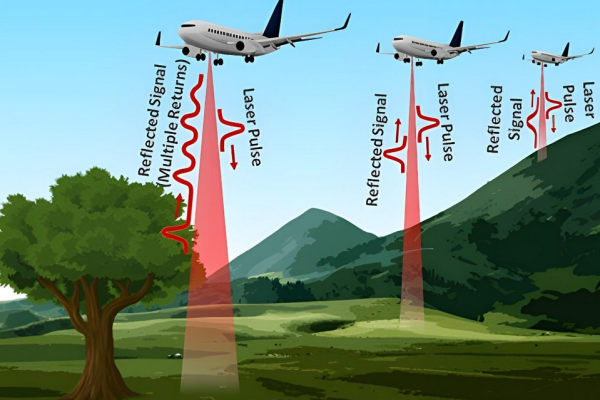
A good LIDAR system records these echoes as discrete points or waveforms, eventually generating the high-resolution digital elevation model (DEM) or 3D point cloud map that we are familiar with.
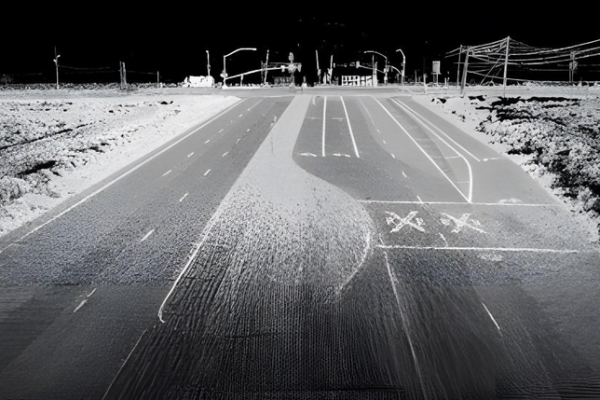
However, all of this is predicated on the detector being able to “see” these echoes. If the echo signals are drowned out by the background noise of the solar spectrum, even the best algorithms will be powerless.
II. Optical Filters: The “Judges” of Signal-to-Noise Ratio
Because LIDAR systems typically operate in extreme environments, such as outdoors and even in space, and require maintenance-free operation, thin-film interference filters have become the industry’s preferred choice.
Why? Because they are durable, require no calibration, and have extremely stable optical performance.
However, ordinary filters cannot meet the demanding requirements of LIDAR. LIDAR filters must be “ultra-narrowband.” Their task is very clear and challenging: to achieve high transmittance within an extremely narrow bandwidth while simultaneously achieving extremely deep cutoff over an extremely wide wavelength range.
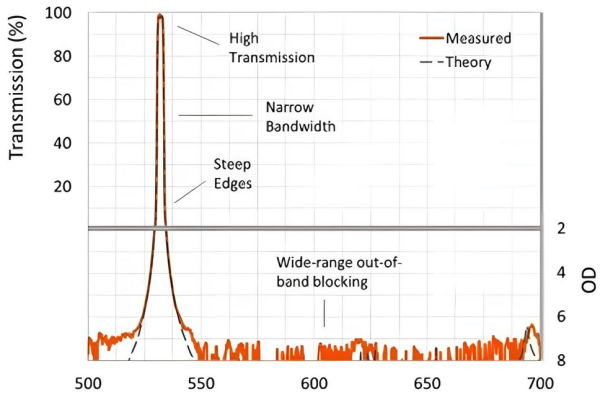
1. Extremely Narrow Bandwidth and High Transmittance
To maximize the signal-to-noise ratio (SNR), the filter must allow only the laser wavelength to pass through.
• Laser altimeters typically require a full width at half maximum (FWHM) of less than 1.5 nm.
• Within such a narrow channel, transmittance must exceed 90% to ensure that the weak echo signal is not lost.
2. Deep Out-of-Band Blocking
This is the filter’s “defense.” It must keep sunlight and other stray light out.
• For laser altimeters, an OD6 (i.e., transmittance of only 0.0001%) is typically required in the 300-1300 nm range.
• For more sophisticated Raman LiDAR, the requirements are even more stringent. It requires extremely steep edges to allow the Raman signal to pass through while blocking the strong elastic backscattered signal (laser wavelength) to OD8 (i.e., transmittance of only 0.000001%).
Key technical points: Each increase of 1 in the OD value means a 10-fold increase in barrier properties. The transition from OD6 to OD8 presents a significant challenge to the coating process.
III. The Hidden Killers Easily Overlooked: Uniformity and Temperature
When selecting components, many engineers often only focus on the center wavelength (CWL) and bandwidth (FWHM), but ignore two key parameters that may lead to system failure: uniformity and thermal stability.
Killer #1: Wavelength Drift Due to Inhomogeneous Film Layers
The principle of thin-film interference filters relies on precise control of film thickness. What happens if the coating process results in uneven film thickness on the filter surface?
The center wavelength will drift depending on its position.
Imagine your filter is designed with a center wavelength of 1064nm. If the film layer at the filter’s edge is slightly thicker or thinner, the transmitted wavelength at that location might become 1062nm or 1066nm.
The result is that the laser echo signal strikes different locations on the filter; some will penetrate, while others will be blocked. This will cause the detector to receive intermittent or uneven signals, directly affecting the integrity of the point cloud.
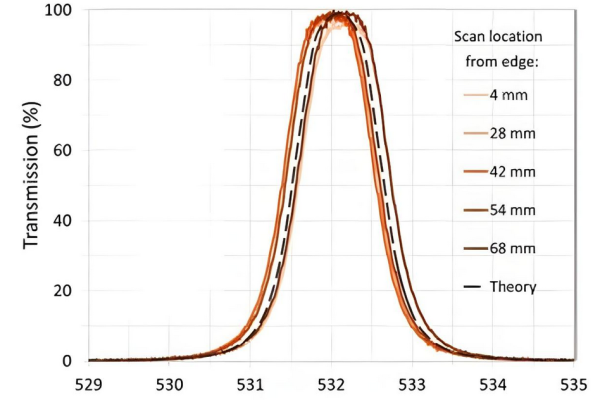
Solution: By strictly controlling the coating uniformity, ensure that the center wavelength variation within the entire light-transmitting aperture is < 0.035%. This means that no matter where the signal hits the filter, it can be accurately captured.
Killer Number Two: Spectral Drift Under Extreme Temperature Differences
LIDAR applications are often brutal:
• Airborne LIDAR: High altitude, low temperature.
• Vehicle-mounted LIDAR: High temperature under the summer sun.
• Satellite LIDAR: Drastic temperature differences in orbit.
Operating temperatures typically range from -40°C to +105°C. The laws of physics tell us that materials expand and contract with temperature, and their refractive index changes accordingly. For ultra-narrowband filters, even a wavelength thermal drift of a few nanometers can cause the laser wavelength to completely shift out of the transmission band, rendering the system “blind.”
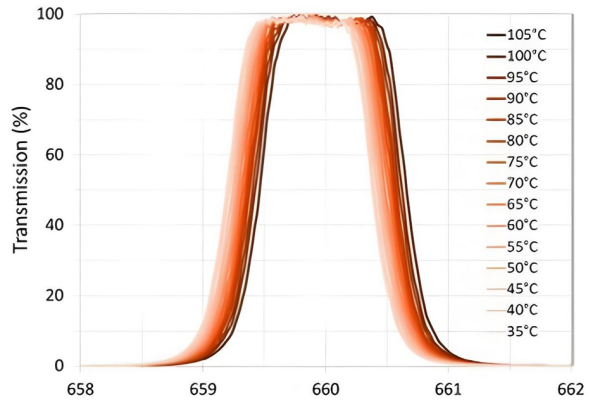
Therefore, high-end LIDAR filters must be specially designed to minimize temperature-dependent wavelength shift, ensuring that the spectral curve remains unchanged even in freezing weather or scorching heat.
IV. Why Choose Borisun?
In the field of ultra-narrowband interference filters, Borisun has become a global technology leader thanks to its innovative SIRRUS plasma deposition process.
We don’t just manufacture glass; we build light channels at the atomic level.
• Extreme Transmittance: Maintaining >90% transmittance even at sub-nanometer bandwidths.
• Perfect Waveform: Featuring extremely steep transition edges and a square-wave passband.
• All-Scenario Adaptability: Whether for off-the-shelf, customized, or OEM mass production, we can provide solutions with excellent uniformity control and extremely high thermal stability.
The performance ceiling of a LIDAR system often depends on the shortcomings of its optical components. Don’t let a single filter become the bottleneck of your sophisticated system.
Conclusion
From the safety of autonomous driving to the accuracy of atmospheric environmental monitoring, LIDAR technology is reshaping how we perceive the world. Behind this lies the physical marvel of precisely filtering and capturing every beam of light.
Choosing the right filter is like equipping your LIDAR system with a pair of “wise eyes,” allowing it to see only the truth amidst the complex noise.