Gene Sequencing Filter
Gene sequencing relies on fluorescent labeling of bases to distinguish A/T/C/G. The entire optical filtering system consists of an excitation filter, a dichroic mirror, and an emission filter, which directly determine the sequencing signal-to-noise ratio, base interpretation accuracy, and channel crosstalk level.
一, Three core filter functions and standard parameters
1. Excitation Filter (Narrowband Pass)
Light path position: light source → in front of dichroic mirror
Function: Only output monochromatic excitation light that matches the dye absorption peak, filter out stray light from the light source, and avoid non-specific excitation background noise
Industry indicators (NGS sequencing level)
CWL center wavelength: 473/488/532/633/685nm (matched with commonly used sequencing dyes FAM, VIC, Cy3, Cy5)
FWHM bandwidth: 3-10nm (ultra narrow 3-5 nm for laser sources; 8-10 nm for LED sources)
Peak transmittance: T ≥ 90%, high-end ≥ 95%
Cut off depth: OD ≥ 5 (full blocking band 200-1200nm)
Transition band steepness: 50% T to OD6 interval<25nm (reducing spectral crosstalk)
2. Dichroic Mirror (45 ° spectrophotometer)
Light path position: at the intersection of the excitation light path and the fluorescence receiving light path, fixed at a 45 ° angle
Function: Reflecting short wave excitation light towards the sample; Transmitting long wave fluorescence signals to the detector to achieve spatial isolation of the optical path
key parameters
Dividing wavelength DM: between the excitation and emission wavelengths (mainstream models DM505/DM560/DM590/DM660)
Excitation band reflectance: R ≥ 95%; Fluorescence band transmittance: T ≥ 93%
Angle tolerance: 45 °± 2 ° with no significant spectral drift
Transition zone width 25-30nm (optimal range for mass production process)
Low wavefront distortion, suitable for high-resolution imaging sequencing platform
3. Emission Filter (System Signal to Noise Ratio Core)
Optical path position: Between dichroic mirror and camera/CMOS detector
Function: Completely block residual scattered excitation light and stray fluorescence, only release target base fluorescence, and require the highest OD value
Sequencing specific indicators
CWL: 510, 570, 670, 710nm (corresponding to four-color sequencing channels)
FWHM: 15-30nm (balancing signal strength and channel isolation)
Peak value: T ≥ 90%
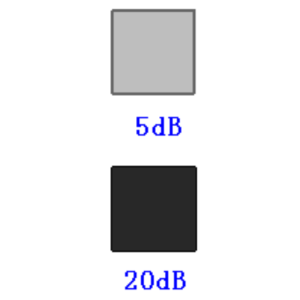
Cut off depth: OD ≥ 6 (high-end high-throughput sequencing OD8-10, excitation light transmittance ≤ 0.000001%)
The passband ripple is less than 3%, and the edge is extremely steep, greatly reducing the crosstalk of multi-color channels
2、 Mainstream sequencing fluorescent dye standard filter combination (four-color NGS universal)
Dye excitation filter, dichroic mirror emission filter, base labeling application
FAM (green) 488/473nm BP5 DM505 510/520 BP20 T base
VIC/HEX (yellow green) 532 BP8 DM560 570 BP25 A base
Cy3 (orange red) 532 BP8 DM590 BP30 C base
Cy5 (Far Red) 633/685 BP10 DM660 670/710 BP30 G base
3、 Process and substrate (sequencing specific high durability coating)
1. Substrate: fused quartz/ultraflat optical float glass, low spontaneous fluorescence, low thermal expansion
2. Coating system: Ta ₂ O ₅/SiO ₂ multi-layer hard film magnetron sputtering, no soft film peeling, anti laser damage
3. Performance advantages:
No wavelength drift, stable long-term continuous sequencing spectra
Low scattering, low fluorescence background, suitable for single molecule high-throughput sequencing
Wide temperature stability (10-45 ℃), suitable for instrument constant temperature cabin environment
4、 Core differences between ordinary PCR filters and gene sequencing filters
1. Cut off depth: PCR only OD4-5; NGS sequencing emission slice forced OD ≥ 6
2. Transition band steepness: PCR transition band 40-60nm; sequencing strictly controls 25-30nm to suppress channel crosstalk
3. Bandwidth accuracy: Sequencing CWL tolerance ± 0.5nm; ordinary PCR tolerance ± 2nm
4. Flatness/wavefront: The sequencing dichroic mirror has ultra-low distortion and imaging is free of ghosting; No requirements for ordinary spectrometers
5. Lifespan: Sequencing with continuous laser irradiation for thousands of hours without attenuation; PCR intermittent use
5、 Application scenario classification
1. High throughput second-generation sequencing (Illumina platform)
Four color synchronous imaging, multi-channel filter wheel module, emission plate OD8, ultra steep dichroic mirror, suppresses base crossing color.
2. Single molecule fluorescence sequencing
Ultra narrow excitation plate (FWHM3-5nm), OD10 emission plate, extremely low background detection of single molecule weak fluorescence.
3. Desktop gene sequencer
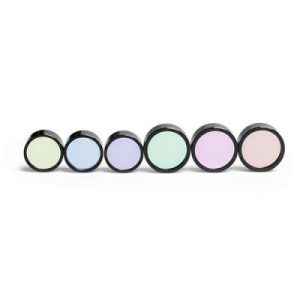
Standardized filter kit, 4-channel integrated filter wheel, with a size of φ 8/12/25.4mm that can be customized.
4. Microfluidic sequencing chip with optical module
Ultra thin and miniaturized filter group, with small aperture and high uniformity coating.
6、 Key points of selection (must see for mass production design)
1. The complete three piece spectral matching collaborative design: the excitation passband falls in the dichroic reflection zone, the emission passband falls in the dichroic transmission zone, and there is no spectral overlap.
2. Multi channel isolation: The crosstalk coefficient is less than 0.1% to avoid misjudgment of A/T/C/G bases.
3. Laser models should prioritize ultra narrow excitation filters; LED light sources can be relaxed to a bandwidth of 8-10 nm.
4. High throughput sequencing requires an OD ≥ 6 emission slice, and the minimum OD5 for low-cost and low throughput platforms cannot be further reduced.
5. The transition band control of the dichroic mirror is 25-30nm, balancing manufacturing yield and spectral isolation effect.
There are some stock models available for selection above, if you need custom Optical Gene Sequencing Filters or bulk orders, please contact our sales team:
info@borisuns.com
Related Products