5G Optical Communication Filters
The 5G optical communication filter is a core optical component used in 5G optical communication networks for selective transmission, reflection, or blocking of specific wavelengths of light. It is a key component for achieving wavelength division multiplexing, improving signal quality, and reducing transmission noise. It is widely used in 5G front-end/back-end networks, data center interconnection, and other scenarios
The 5 basic bands of fiber optic communication standards
1. O-band 1260-1360nm
2. E-band 1360-1460nm
3. S-band 1460-1530nm
4. C-band 1530-1565nm
5. L-band 1565-1625nm
5G Forward CWDM Filter (ITU-T G.694.2, 20nm Interval)
Standard 18 wave center wavelength (nm)
1271, 1291, 1311, 1331, 1351, 1371, 1391, 1411, 1431, 1451, 1471, 1491, 1511, 1531, 1551, 1571, 1591, 1611
5G commercial commonly used 6 waves (O+S segment)
1271, 1291, 1311, 1331, 1351, 1371
Key indicators of the frequency band
1dB passband width: ≥ 13nm
Wavelength temperature drift: ≤ 0.002nm/℃
Isolation: Adjacent ≥ 25dB, non adjacent ≥ 30dB
MWDM Medium Wavelength Division (5G 12 Channel Forward, CWDM Derivative)
At 6 CWDM wavelengths with a deviation of ± 3.5nm and 12 wavelength ranges of 1267.5~1374.5nm:
1267.5, 1274.5, 1287.5, 1294.5, 1307.5, 1314.5, 1327.5, 1334.5, 1347.5, 1354.5, 1367.5, 1374.5
Channel spacing ≈ 7nm, single fiber carrying 12 25G 5G signals
LWDM Fine Wavelength Division (800GHz spacing ≈ 4.4nm, 400G/800G optical module)
Band range: 1269.3~1318.35nm
Standard 8 wavelengths: 1273.54, 1277.89, 1282.24, 1286.59, 1290.94, 1295.29, 1299.64, 1303.99nm
Used for 800G/1.6T silicon optical modules, 5G carrying high-speed interconnection
DWDM Dense Wavelength Division (5G backbone/carrier, C-band 1529.55-1565.50nm)
Mainstream with 100GHz interval (0.8nm) and 50GHz interval (0.4nm)
Example of standard center wavelength (15xx series):
1529.55、1530.33、1531.12、1531.90、1532.68、1533.47……1565.50nm
Filter bandwidth: -0.3dB bandwidth is only 0.2~0.4nm, cut-off depth OD4~OD6
5G PON Triplexer Three-way Filter (base station/ONU optical modem)
1. GPON standard three band:
Upstream transmission: 1310nm (O-band)
Downstream data: 1490nm (S-band)
Cable TV monitoring: 1550nm (C-band)
2. XGS-PON(10G PON):
Upstream: 1270nm
Downward: 1577nm
Video surveillance: 1550nm
5G Optical Module/front-end System:
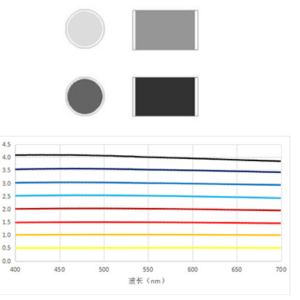
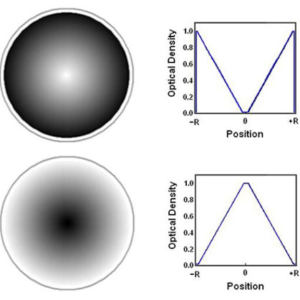
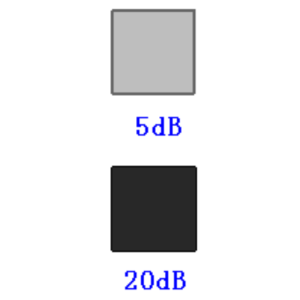
Variable density filters (gradient ND attenuation )
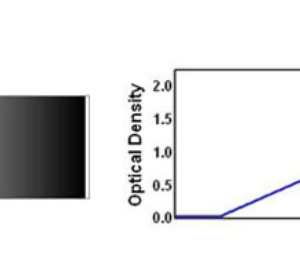
1. Linear translation (rectangular strip)
OD gradually changes along the long side, and the motor is adjusted for translation; Mostly used for production line fixtures and external VOA
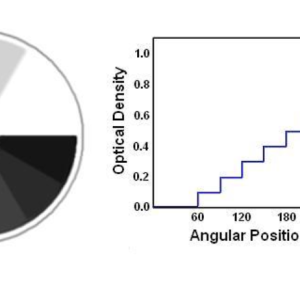
2. Rotate circular gradient plate (semi-circular gradient)
Continuous OD gradient from 0 to 270 °, with attenuation corresponding to rotation angle; Built in TOSA/ROSA small optical path preferred
There are some stock models available for selection above, if you need custom Optical communication filters or bulk orders, please contact our sales team:
info@borisuns.com
Related Products