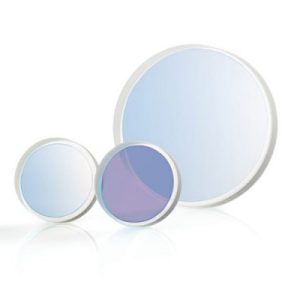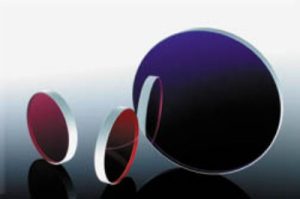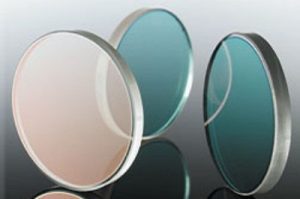
The fixed or variable optical attenuator of the type of attenuation plate directly fixes the attenuation plate with absorption characteristics on the end face of the optical fiber or in the optical path to achieve the purpose of attenuating the optical signal. This method can not only be used to make fixed optical attenuators but also to make variable optical attenuators.
The optical attenuation plate protects the eyes from strong light stimulation by absorbing excess light energy. The optical fiber attenuation plate works within a specific wavelength range to protect the optical fiber.
The standard for a good optical fiber attenuation plate is to absorb the extra optical fiber instead of reflecting it, because in optical fiber communication, a lower optical power is required without damaging the optical fiber attenuation plate. Attenuation bands of attenuation plates:1. Ultraviolet band: 250nm – 380nm attenuation 20%, 50%.2. Visible light band (VIS): 400nm – 700nm attenuation 99%, 90%, 80%, 70%, 50%, 30%, 20%, 10%.3. Visible and near-infrared bands (Vis + NIR): 400nm – 1000nm Attenuation: od = 0.5, od = 1, od = 2, od = 3, od = 5, od = 10, od = 20, od = 30;4. Optical communication bands: 1200 nm, 1310 nm, 1550 nm, with transmittance rates of 70%, 20%, 50%, and 1% respectively, etc.
Neutral density attenuators based on the absorption of light by metal ions have developed into attenuation fibers containing mixed metal ions. Like ordinary fibers, these attenuation fibers have a fixed attenuation coefficient per kilometer, but this attenuation coefficient is not calculated in kilometers but in millimeters. The attenuation fiber is inserted into a ceramic plug and specially processed to form a fixed attenuation plate with positive and negative types.
Neutral density attenuators adopt solid-state light attenuation technology. Adjustable optical attenuators in the form of air-isolated absorption glass achieve adjustable attenuation through mechanical methods. Currently, there are also a few solid-state light attenuation technologies, such as adjustable diffraction grating technology, MEMS technology, liquid crystal technology, magneto-optic technology, planar optical waveguide technology, etc.
The application fields of neutral density attenuators are very wide, including: optical digital cameras, ultraviolet measurement instruments, cameras, various lasers, various optical instrument equipment, optical communication attenuation filters, etc.